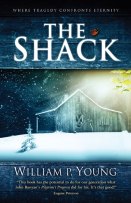
 Today, William P. Young’s bestseller, The Shack, hits theaters across America. I’m sure it will receive glowing reviews from Christian and non-Christians alike. I’m certain many Christians will open their wallets and pay good money to see it. Before you go, please take time to read the article and at least arm yourself with a few truths.
But is The Shack worth your money? In full disclosure, this is not a movie review. In fact, I am not planning on seeing the movie. If this article is anything, it’s simply my desire to caution people to be very careful if they choose to see the movie. At the least, The Shack confuses the Word of God. At its worst, The Shack completely contradicts our long-held orthodox view of the Trinity and Salvation. In short, don’t waste your money on The Shack. If you are not well-grounded in scripture it will simply make you feel good and confuse you on some important Christian beliefs.
I read The Shack many years ago. I had multiple people in my church ask my thoughts on the book. I remember then how disappointed I was in it and how worried I was that so many Christians, not only read the book, but enjoyed it and saw nothing wrong with its contents. I have too many more important books to read than to waste my time in rereading The Shack. Instead, I did a little research into the book and was reminded why I disliked it some much and why I must caution you to stay away from the movie.
First, Young does a wonderful job in spinning a beautiful fictional story with highly emotional content while somehow weaving what many people feel are central Christian beliefs throughout. As you read the book, you realize this is not a Christian book even though it advertises itself as on. The problem is the weaving Young does will simply confuse too many Christians. For instance, he completely confuses the Trinity.
First, Young portrays the Father as “Papa,” a large African-American woman, and he paints the third person of the Trinity as a small Asian woman. That in itself is confusing enough. While scripture does give God feminine features as in Matthew 23 where Jesus says He “longed to gather your children together, as a hen gathers her chicks…,” when scripture speaks of the Father, Son, and Holy Spirit it uses the masculine term. God is our Father, not our mother. We cry out Abba Father, we don’t cry out to our mother. Jesus is the unique Son of God, not a daughter of God. In scripture when speaking of the Holy Spirit it always uses the masculine as in John 16:8: “When he comes, he will convict the world of guilt…” Again, portraying the Father as an African American woman and the Holy Spirit as an Asian woman is very problematic for Christians. In this day where our nation is working through our own gender identity crisis, it doesn’t help the church when books and movies confuse the identity of the Godhead.
Young goes on to confuse the Trinity when he states, “When we three spoke ourself into human existence as the Son of God we became fully human.” What does that even mean? Scripture teaches the Son became the incarnate God, not the Trinity (Philippians 2:5-11). The Trinity is one God but has revealed Himself to us in three co-equal, co-eternal persons, the Father, Son and Holy Spirit. The Shack does a wonderful job in completely confusing the already great mystery of the Trinity.
The problem with the Shack is it not only confuses our orthodox beliefs, in several places in it completely contradicts Scripture. For instance, Young completely denies the existence of sin and evil. Young writes, “…evil is a word we use to describe the absence of good, just was we use the word darkness to describe the absence of light… evil and darkness can only be understood in relation to Light and Good; they do not have any actual existence.” (p 136) The denial of sin and evil can not be overlooked and swept under the rug. This is a heretical belief and should be enough for every Christian to revolt from both the book and movie.
Why did the Father send His Son? To die for you and me. Why did Jesus die? Because of the reality of sin and evil that began when Satan revolted in heaven and Adam chose to eat of the tree in the Garden. If there is no evil and sin, there is no Gospel. I say all the time if there is no bad news, the good news is only news. Why is the Gospel good news? Because there is bad news: the bad news reality of sin, evil, and death and God’s future punishment of evil and sin.
Young also completely annihilates the role of the atoning sacrifice. Mack asks Papa, “Aren’t you the one spilling our great bowls of wrath and throwing people into a burning lake of fire?… (Papa replies) I don’t need to punish sin. Sin is its own punishment, devouring you from the inside. It’s not my purposes to punish sin; it’s my joy to cure it.” Can you see the fallacy and heresy in this statement?
Much of what Young writes sounds really good and we may wish it to be true. However, it contradicts the plain teaching of the Bible. The wages of sin is death (Romans 6:23). God will absolutely punish sin. Exodus 34:6-7 holds the beauty of the tension of a compassionate and punishing God: “The Lord, the Lord, the compassionate and gracious God, slow to anger, abounding in love and faithfulness, maintaining love to thousands, and forgiving wickedness, rebellion, and sin.” Praise be to God. This is the God William Young paints in the pages of The Shack.
The problem is the scriptures continue. “Yet he does not leave the guilty unpunished…” (Ex 34:7). How can God be both a compassionate God while also being a God who punishes the wicked? The answer is found in Jesus. God punished the wickedness of rebellion and sin through His Son. The wrath God had reserved for me He instead poured out upon His Son Jesus. We serve a glorious God. I can assure you, He will punish evil and sin fully and finally one day. Today you must repent of your sin, believe in the finished work of Jesus and trust Him as your Savior (Romans 10:9-10). Don’t delay; God has punished sin in His Son and will punish sin in the future.
Young also confuses and contradicts scripture when Papa, the character of God, is seen with scars on her wrist. “Papa didn’t answer, only looked down at their hands. His gaze followed hers and for the first time Mack noticed the scars in her wrists, like those he now assumed Jesus also had on his … Jesus reached across the table and took Papa’s hands in his, scars now clearly visible on his wrists” (pg 95, 107). Again, this is a gross misunderstanding of the atonement and I believe out-and-out heresy.
Jesus was our atoning sacrifice (1 John 2:2). Our sin debt was paid by Christ on the cross to the Father. The Father did not die on the cross. Instead, He poured His wrath on His Son and Jesus died a substitutionary death for you and me.
We could go on and on. Young is also a universalist. He believes there is no need for the atonement. Once again Young will confuse many Christian who are not grounded in scripture. In the book, he has Jesus saying, “‘Who said anything about being a Christian? I’m not a Christian. The idea struck Mack as odd and unexpected and he couldn’t keep himself from grinning. ‘No I suppose you aren’t.’ ‘Those who love me come from every system that exists. They were Buddhist or Mormons, Baptists or Muslims, Democrat, Republican and many who don’t vote or are not part of any Sunday morning or religious institution… I have no desire to make them Christian, but I do want to join them in their transformation into sons and daughters of my Papa, into my brothers and sisters, into my beloved.’ ‘Does that mean,’ asks Mack, “that all roads will lead to you?’ This is denied by Jesus by he explains, “What it does mean is that I will travel any road to find you’” (page 182).
Can you see the mastery of Young? He skillfully weaves truth together with out-and-out lies. In my research for this article, here are some of the other statements Young makes in The Shack that should cause us to stay for away from both the movie and the book:
“God puts himself on our human level and limits himself”;
“Although Jesus is fully God, he has never drawn upon his nature as God to do anything”;
“God cannot act apart from love”;
“I don’t need to punish people for sin”;
The Father and Jesus were crucified together;
“God cannot send any of his children to an eternity of hell just because they sin against him”;
“mercy triumphs over justice because of love”;
Jesus is “a path of reconciliation”.
If you are not able to see the error in the above statements, by all means, do not go to this movie or waste your money and time by reading the book. Is this a Christian book? I would want to first ask if Young himself is a Christian. Let Young’s words speak for themselves: Young has been quoted as saying, “evangelical faith and its teaching about judgment makes God “grossly unjust”; that “Jesus is a million times more vicious and vindictive than Pharaoh, Nero, or Hitler put together”; that Jesus Christ is “not the Savior from sins”; that Jesus died “a failure and in vain and never saved anyone”; thus Jesus “is not even a good man but a liar, a rogue, and a deceiving rascal”; that “Calvary is a farce, a travesty, and a sham.” (I saw this in multiple places but here is one reference about evangelical faith and its teaching https://www.movieguide.org/news-articles/reel-change.html).
I think the above statements give us biblical justification to doubt the salvation of Young and therefore doubt the motive and essence of this book. This is neither a Christian movie nor a Christian book.
Should a Christian spend their hard earned money on this movie? I for one can find many other things I would rather spend my money on. Don’t waste your money. If you are not strong in your faith, this movie will touch you on an emotional level but will also confuse you. If you are knowledgeable about scripture and strong in your faith, the movie will probably just make you mad. We are living in a day where there seems to be very little spiritual discernment. My recommendation is to encourage you to get into your Bible. Get to know the truth so well that the lies and heresies we see in a book like The Shack will be quickly discerned by Christian everywhere.
 To get to the heart of this question, we must remember four simple truths which are revealed to us in Scripture. First, Jesus was fully human. Throughout Scripture we see the humanity of Christ evidenced in his hunger, his sleeping, his tears, his sorrow, his agony and his death, to name a few. Secondly, we affirm He was fully tempted by Satan in the desert. Hebrews 4:15 tells us Jesus was “tempted in every way.” Next, Jesus is fully God. This is the beauty and mystery of the Incarnation. Jesus was both God and man. In his Gospel, Matthew confirms this by simply saying Jesus is Immanuel, “God with us.” Finally, we must remember God can not be tempted (James 1:13). Therefore, Jesus was fully human and fully divine. In His humanity, He was physically capable of sinning but in His divinity, He was morally incapable of sinning. In other words, in His humanity, He was tempted just as we are but in His divinity, He was not tempted; this is a great mystery that boggles our minds.
 Connecting Point Blog